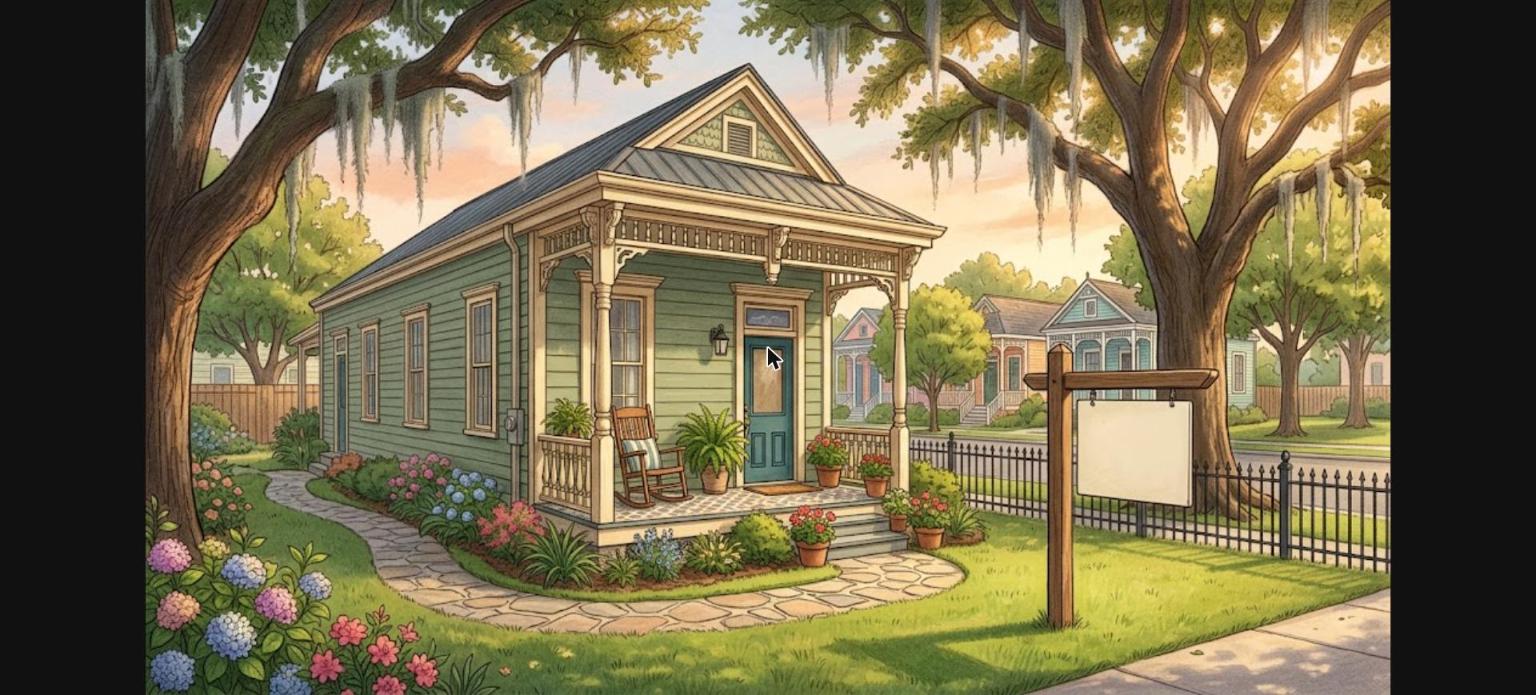



Baton Rouge LA DSCR loans give real estate investors a way to finance a rental property using the income the property is expected to produce, instead of personal tax returns and pay stubs. That single difference is why so many investors in the Capital Region use them, and it is also why the down payment and reserve conversation looks nothing like a standard home loan conversation. If you are buying your first rental in East Baton Rouge Parish, or adding to a portfolio in Zachary, Denham Springs, Gonzales, or Prairieville, the numbers below are the ones to plan around before you write an offer.
How Baton Rouge LA DSCR Loans Qualify a Property Instead of a Person
DSCR stands for debt service coverage ratio. It is a simple comparison: the property’s expected monthly rent divided by the property’s total monthly payment, including principal, interest, taxes, insurance, and any HOA dues. That combined payment is often written as PITIA.
Because the property carries the qualification, Baton Rouge LA DSCR loans usually do not ask for W-2s, personal tax returns, or a debt-to-income calculation on your personal income. That is helpful for self-employed investors, investors with several properties already reported on Schedule E, and investors who own through an LLC.
Two things are worth saying plainly. First, no personal income documentation does not mean no underwriting. There is a full appraisal, a rent schedule, a credit review, an asset review, and an insurance review. Second, nothing here is an approval. Every file is reviewed on its own merits, and program availability changes.
Down Payment Expectations on Baton Rouge LA DSCR Loans in 2026
Most Baton Rouge LA DSCR loans in the current market look for 20 to 25 percent down on an investment purchase. Some lenders will consider less for a borrower with strong credit and a coverage ratio comfortably above 1.0, and some push toward 25 percent or more when the ratio is thin, the credit profile is lighter, or the property type is more complex.
A few patterns show up repeatedly in Baton Rouge files:
- Single family rentals generally price and structure most favorably.
- Two to four unit properties often carry a slightly larger down payment expectation than a single family rental.
- Short-term rental income, where it is used at all, is reviewed differently than a signed long-term lease and can affect the down payment tier.
- Purchases through an LLC are common and normally supported, though the entity paperwork has to be in order before closing.
Plan your capital around the higher end of the range. Investors who budget 25 percent and land at 20 percent have a good problem. Investors who budget 15 percent and land at 25 percent lose the deal.
Reserve Requirements on Baton Rouge LA DSCR Loans
Reserves are liquid funds you still hold after the down payment and closing costs are paid. Lenders want to see that a vacancy, a roof repair, or an insurance increase will not immediately put the loan at risk. This is the requirement first-time investors miss most often.
Reserve expectations on Baton Rouge LA DSCR loans commonly run somewhere between two and twelve months of PITIA, and the requirement tends to increase when the loan amount is larger, the credit score is lower, the coverage ratio is closer to break even, or you already have several financed properties. Some programs will look at a ratio below 1.0 only when a much deeper reserve position is documented.
Reserves must be documented and seasoned in accounts you control. Money that is still sitting in a business account belonging to a partner, or funds you plan to borrow the week before closing, generally will not count. Build the reserve line into your purchase budget from the start rather than treating it as an afterthought.
How the DSCR Ratio Is Calculated on a Baton Rouge Rental
Most programs treat a ratio of 1.0 as break even, meaning the rent covers the payment exactly. Better pricing and more flexible structure on Baton Rouge LA DSCR loans usually begin around 1.25x DSCR, which means the expected rent is roughly 25 percent greater than the full monthly payment.
A Simple Baton Rouge Example
Say a three bedroom rental in the Baton Rouge area is expected to rent near the local three bedroom range, and the full PITIA on your financing structure comes to $1,300 a month. If the appraiser’s rent schedule supports $1,650, the ratio is roughly 1.27. That file sits in a comfortable place. If taxes and insurance come in higher than you estimated and PITIA lands at $1,600 instead, the same rent produces a ratio near 1.03, and the terms available to you change.
This is why the insurance quote matters so much in Louisiana. It is the single input that most often moves a Baton Rouge deal from comfortable to marginal between offer and closing.
Credit, Property, and Entity Documentation
Credit expectations on Baton Rouge LA DSCR loans commonly start somewhere in the 620 to 660 range, with the strongest structures available to investors above 700. Beyond credit, expect to provide:
- A purchase agreement and earnest money documentation
- Two or more months of bank statements showing down payment and reserve funds
- Leases in place, if the property is already tenant occupied
- Entity documents, operating agreement, and EIN if you are closing in an LLC
- A bound property insurance policy, plus flood coverage where the property requires it
Local Cost Factors That Change Baton Rouge Cash Flow
Three local items deserve attention before you model a deal with Baton Rouge LA DSCR loans in the Capital Region and the surrounding parishes.
Flood zone and flood insurance. Parts of East Baton Rouge, Livingston, and Ascension Parish carry meaningful flood exposure, and post-2016 elevation and mapping realities affect premiums. Check the property’s flood zone through the FEMA Flood Map Service Center during your inspection window, not after.
Property tax and homestead exemption. An investment property does not carry a homestead exemption. If you are looking at a tax bill from an owner occupant seller, the number you inherit will be higher. Underwrite the investor figure.
Rent realism. Baton Rouge rents have moved modestly rather than dramatically over the past year, and the market varies considerably between the LSU corridor, the Mid City and Garden District areas, and the suburban parishes. Use comparable rents from the specific submarket rather than a citywide average.
What to Do Before You Write an Offer
A short sequence saves a lot of trouble. Get an insurance quote on the actual address early. Pull the investor tax figure rather than the seller’s. Confirm your down payment and reserve funds are in accounts you control and can document. Then run the coverage ratio with those real numbers rather than estimates. If the ratio is thinner than you expected, there is usually time to adjust the offer, the structure, or the property before you are under contract.
If you want to compare this against unit-count-specific structures, our Baton Rouge LA DSCR loans overview walks through the program in more detail.
Talk Through Your Baton Rouge Numbers
Every deal is different, and the fastest way to know where you stand with Baton Rouge LA DSCR loans is to run your specific property and your specific capital position through the math with someone who does it daily.
- 24/7 prequalification hotline: 504-399-4141
- 24/7 application hotline: 504-332-0888
Charles, Mortgage Loan Advisor with Max Mortgage, LLC. 20+ years in mortgage and real estate. NAMB Certified FHA Mortgage Professional.
Max Mortgage, LLC | NMLS #1446745
Charles Parharm | NMLS #1413036
Licensed to conduct residential mortgage business in applicable states. Loan programs, terms, and conditions are subject to change without notice. All loans are subject to approval. Equal Housing Opportunity.