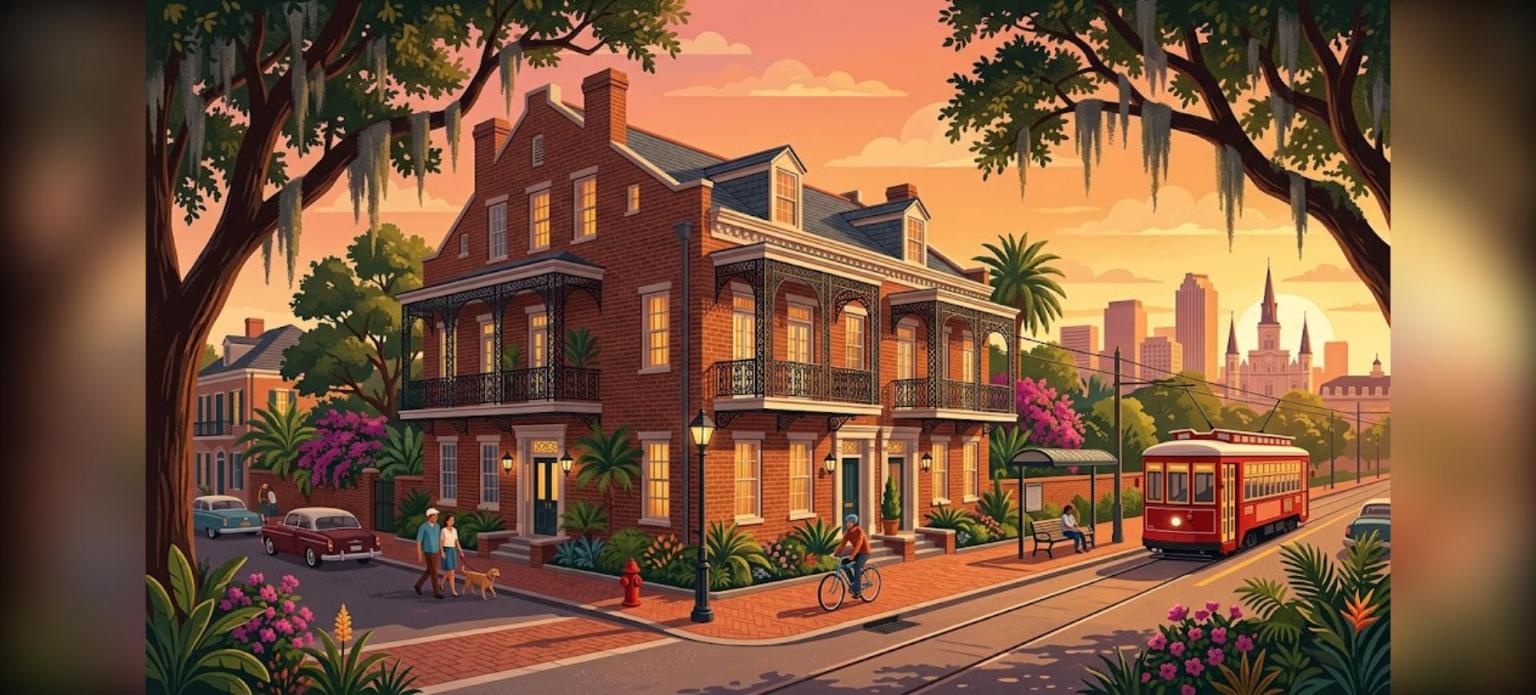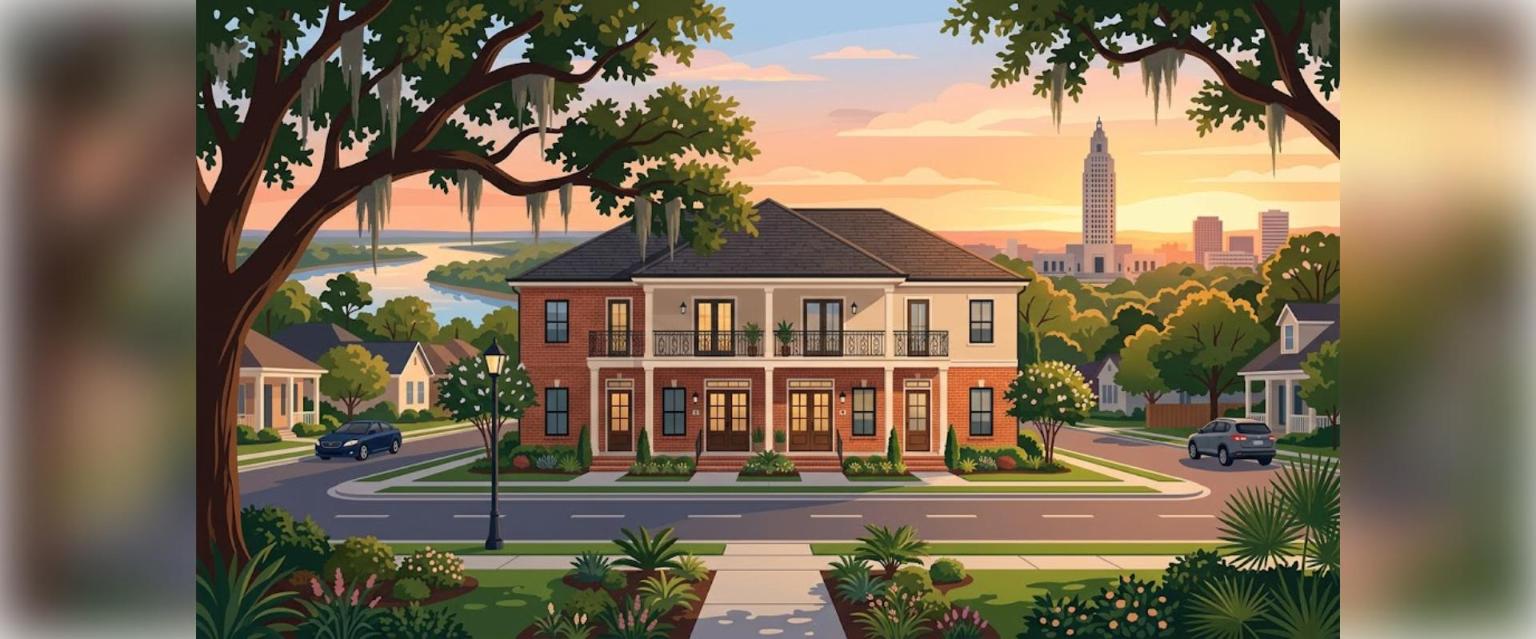

New Orleans reverse mortgage loans are drawing fresh attention from homeowners age 62 and older across Orleans, Jefferson, St. Tammany, St. Bernard, and Plaquemines parishes. The reason shows up on every insurance renewal and every tax bill. Homeowners who bought decades ago and paid down or paid off their mortgage are sitting on real equity, while the cost of simply keeping the house has climbed faster than a fixed income can absorb.
A New Orleans reverse mortgage is not a giveaway and it is not free money. It is a loan, secured by your home, that converts part of your accumulated equity into cash, into a standby credit line, or into the elimination of a monthly mortgage payment. This guide walks through how it works, what it costs, and where the real tradeoffs sit, so you can weigh it with clear eyes.
What New Orleans Reverse Mortgage Loans Actually Are
The large majority of New Orleans reverse mortgage loans are Home Equity Conversion Mortgages, or HECMs. A HECM is insured by the Federal Housing Administration and governed by HUD rules. It is available to homeowners who are at least 62 years old and who live in the home as their primary residence.
The mechanic that catches most people off guard is simple once you see it. With a standard mortgage, you send a payment every month and the balance goes down. With a HECM, no monthly mortgage payment is required, and the loan balance grows over time as interest and mortgage insurance accrue. The loan becomes due when the last remaining borrower sells the home, permanently moves out, or passes away.
You keep ownership the entire time. Title stays in your name. The lender does not take the house and does not become a co-owner. The reverse mortgage is simply the loan recorded against the property, the same way a purchase mortgage or a home equity loan would be.
How Much Can You Get in 2026?
For 2026, the FHA maximum claim amount for a HECM is $1,249,125, up from $1,209,750 the prior year. That number is the ceiling used in the underwriting formula, not a figure everyone receives.
What New Orleans reverse mortgage loans actually make available to a specific homeowner depends on the age of the youngest borrower, current expected interest rates, and the appraised value of the home, capped by that national limit. Home values across the New Orleans metro have been reported anywhere from roughly $265,000 to the mid $300,000s depending on the parish and the data source, so for most local homeowners the appraised value of the house, not the national ceiling, is what sets the number.
Why New Orleans Homeowners 62+ Are Looking At Reverse Mortgage Loans
A few pressures come up again and again in conversations with retired homeowners in this market.
Insurance leads the list. Property insurance premiums across Orleans, Jefferson, St. Bernard, and St. Tammany parishes have climbed sharply in recent renewal cycles, and flood insurance stacks on top of that for homes in mapped flood zones. On a fixed income, a premium that jumps a few hundred dollars a year can force uncomfortable choices.
Property taxes are close behind. Louisiana’s Special Assessment Level, sometimes called the senior freeze, locks in the assessed value of a homestead for qualifying homeowners age 65 and older whose household adjusted gross income falls under the annual threshold. It helps with one line item, but it does nothing for insurance, utilities, medical bills, or a mortgage balance that is still outstanding.
Staying put matters more than moving up. Many longtime New Orleans area homeowners are not looking for a bigger house. They want to age in place, near the same neighbors, the same church, the same doctors. Reverse mortgage loans get considered because they speak directly to that gap between wanting to stay and being able to afford to stay.
If there is still a balance on the existing mortgage, HECM proceeds are typically applied first to pay it off, which removes that required monthly principal and interest payment. Whatever is left over can be taken as a lump sum, a line of credit, monthly payments, or a blend, depending on what the borrower qualifies for and needs.
What Homeowners Still Have To Do
Losing the monthly mortgage payment does not mean losing every obligation. New Orleans reverse mortgage loans still require the homeowner to:
- Pay property taxes on the home
- Keep required homeowners insurance in force, including flood insurance where it applies
- Pay HOA dues if the neighborhood has them
- Maintain the property in reasonable condition
- Live in the home as a primary residence
Falling behind on those items can put the loan into default and, in the worst case, lead to foreclosure. That is worth saying plainly, because glossing over it does not serve anyone.
To guard against that outcome, lenders run a financial assessment that looks at credit history, income, and expenses. If the numbers are tight, the lender may set aside a portion of the loan proceeds specifically to cover future taxes and insurance. That set-aside reduces what is available up front, but it exists to keep the loan, and the homeowner, out of default.
HUD Counseling Before You Apply
Before a HECM application can move forward, federal rules require a counseling session with an independent, HUD-approved counselor. Sessions typically run sixty to ninety minutes and can be done by phone. The counselor does not work for the lender and does not earn a commission on the loan.
Bring questions. Bring an adult child if that helps. The session exists to pressure test whether a reverse mortgage actually fits your situation, and it is common for someone to walk out having decided it is not the right tool for them right now. That is a legitimate, expected outcome, not a failure.
What Happens To Your Heirs
The fear we hear most often is that a reverse mortgage will leave the kids holding debt. New Orleans reverse mortgage loans written as HECMs are non-recourse. Neither the homeowner nor the heirs will ever owe more than the home is worth when the loan comes due, even if the balance has grown past the home’s value. The lender’s recovery is limited to the property itself.
When the last borrower passes away or permanently leaves the home, heirs typically have a few paths. They can sell the home and keep any equity above the loan balance. They can repay the loan, often through a refinance, and keep the property in the family. Or they can allow the lender to sell the home and walk away without personal liability. Doing nothing is not an option, since standard timelines apply once the loan becomes due.
If leaving the house free and clear to the next generation is the top priority, a reverse mortgage works against that goal, because the balance grows rather than shrinks over time. That tradeoff belongs in a family conversation before closing, not as a surprise afterward.
What New Orleans Reverse Mortgage Loans Cost
Nobody should sign anything without understanding the cost side, since that is where most criticism of the product starts. Closing costs on New Orleans reverse mortgage loans are typically financed rather than paid out of pocket, which means they also accrue interest over time.
The main categories are an upfront FHA mortgage insurance premium charged at closing, an annual FHA mortgage insurance premium that accrues on the outstanding balance, an origination fee capped under HUD rules, third-party closing costs such as appraisal, title work, and recording fees, and ongoing interest that compounds because there is no required monthly payment reducing it.
That compounding is the point worth sitting with. Because payments are optional, the balance on New Orleans reverse mortgage loans grows month after month. If you expect to move within a few years, the upfront costs get spread across a short window and the math can look poor. The longer you plan to stay, the more the structure tends to work in your favor.
Payout Options You Can Choose From
How the money is disbursed matters as much as how much is available.
A lump sum delivers a single draw at closing, generally at a fixed rate, and fits situations with a large existing mortgage to retire or a defined expense like a new roof or an accessibility remodel. A line of credit provides an available balance to draw from as needed, usually at an adjustable rate, with an unused portion that grows over time, which suits homeowners who want a standby resource rather than immediate cash.
Tenure payments provide equal monthly advances for as long as the home remains the primary residence, aimed at homeowners chasing steady monthly cash flow. Term payments provide equal monthly advances for a fixed number of years, useful for bridging to a known future event such as a pension starting or another asset selling. Most borrowers land on a combination, commonly paying off the existing mortgage at closing and keeping the remainder as a line of credit.
Alternatives Worth Comparing
An honest look at New Orleans reverse mortgage loans includes the alternatives, including doing nothing at all. A home equity line of credit is generally cheaper to open but requires monthly payments and income qualification, which is the exact hurdle many retirees run into, and lenders can reduce or freeze the line.
A cash-out refinance delivers a lump sum but replaces the old loan with a new monthly payment for fifteen or thirty years, which moves in the wrong direction if eliminating the payment is the goal. Downsizing can free up equity without any loan, though a smaller home may not be dramatically cheaper once insurance and moving costs are factored in. And sometimes the honest answer is that the current budget works and the equity is best left alone.
For a neutral, third-party explanation of how these loans work, the Consumer Financial Protection Bureau’s reverse mortgage overview is a useful starting point, and Max Mortgage’s own reverse mortgage guide covers the process in more depth.
Local Details Worth Knowing
Flood zones and insurance. Because a HECM is FHA insured, required flood insurance must stay in place wherever the property sits in a designated flood zone. Premiums vary considerably between neighborhoods in Orleans, Jefferson, St. Bernard, and Plaquemines parishes depending on flood zone designation and elevation, and that cost needs to be budgeted as permanent, not optional.
Property condition. The FHA appraisal on New Orleans reverse mortgage loans evaluates safety and habitability, not just market value. Roof condition, deferred maintenance, and aging mechanical systems can trigger required repairs, sometimes handled after closing through a repair set-aside and sometimes required before closing. Homes with visible deferred maintenance are worth flagging early rather than letting the appraisal be the first place it surfaces.
Historic and non-standard properties. New Orleans has a large stock of older shotgun houses, camelback homes, and historic-district properties. Some property types carry additional eligibility requirements. Confirming property eligibility before paying for an appraisal saves time and money.
Common Questions About New Orleans Reverse Mortgage Loans
Do I have to own my home free and clear? No. An existing mortgage balance is usually paid off with the proceeds, which is often the main reason homeowners look into New Orleans reverse mortgage loans in the first place.
Can the lender take my house? Not as long as the ongoing obligations, taxes, insurance, and upkeep, are met. Title stays in the homeowner’s name throughout.
Is the money taxable income? Loan proceeds are generally not treated as income, but tax questions belong with a tax professional rather than a lender.
What if my spouse is under 62? Specific eligible non-borrowing spouse protections exist under HECM rules. This is exactly the kind of detail to walk through in a real conversation rather than assume from a general guide.
How long does the process take? Counseling, underwriting, and appraisal commonly put New Orleans reverse mortgage loans on a timeline close to a standard purchase mortgage, though individual files vary and no closing date can be promised in advance.
Talk It Through With No Pressure
There is no universal answer for whether New Orleans reverse mortgage loans make sense. It depends on age, health outlook, how long you plan to stay in the home, other retirement assets, any existing mortgage balance, and what you want to leave behind.
If you own a home in New Orleans or anywhere within about fifty miles and you are 62 or older, you are entitled to a straight, unhurried explanation before deciding anything. Visit maxxla.com/reverse to request a free, no-obligation consultation. We will walk through the numbers on your specific home, explain what New Orleans reverse mortgage loans would and would not do for your situation, and say plainly if we think it is a poor fit.
Charles, Mortgage Loan Advisor with Max Mortgage, LLC. 20+ years in mortgage and real estate. NAMB Certified FHA Mortgage Professional.
Max Mortgage, LLC | NMLS #1446745
Charles Parharm | NMLS #1413036
Licensed to conduct residential mortgage business in applicable states. Loan programs, terms, and conditions are subject to change without notice. All loans are subject to approval. Equal Housing Opportunity.